

Ever spent more time fixing peeling prints than actually wearing your favourite tee? You’re not alone. That’s why designers, merch makers, and custom T-shirt fans in Singapore are all looking to one printing method that’s changing the game – DTF printing technology.
It’s quick. It’s sharp. It works on almost anything. And yes, it finally puts those wash-proof, high-colour dreams on fabric without the downsides of traditional methods.
Let’s break down what makes DTF so powerful, how it works, and whether it’s the right fit for your next custom T-shirt order.
Read more: Tips on Customizing & Designing a Shirt- Part I
What Exactly Is DTF Printing Technology?
DTF stands for Direct to Film, and it’s exactly what it sounds like. Instead of applying ink straight onto the fabric like DTG, DTF involves transferring your design onto a PET film first.
The printed film is treated with a special adhesive powder, set with heat, and firmly applied to the garment through pressing.The result? A bold, flexible print that sticks well, feels smooth, and holds up through repeated washes. All without the messy pre-treatment or water-heavy rinsing other methods need.
And it’s not just for T-shirts.
You can apply DTF printing to all kinds of apparel and items, from everyday garments to custom accessories. Such as:
- Aprons
- Tote bags
- Hoodies
- Sports jerseys
- Caps and hats
- Cotton polos
- Polyester tees
- Canvas pouches
- Denim jackets
- Even face masks
As long as the surface can take heat and pressure, chances are it can take DTF. That makes it a solid choice whether you’re printing team uniforms, corporate gifts, or trendy merch drops.
Tired of prints that don’t turn out the way you imagined? We get it. At T-shirt Guys, we make sure your ideas come out exactly how you pictured. Sharp, wearable, and built to last. Drop us a message, WhatsApp, or call – whichever way’s easiest for you.

Here’s How DTF Printing Works – Step by Step
You might’ve heard that DTF printing is “simple.” And while it’s definitely more efficient than many other methods, there’s still a proper process behind every clean, high-quality transfer. Here’s how it all comes together, from digital design to the final press.
1. Design Preparation
It all starts with your artwork. The design is created digitally. Usually in high-resolution using design software like Photoshop or Illustrator.
It’s then mirrored (flipped horizontally) before printing, so it appears the right way round once transferred onto the fabric.
Why this matters: Mirroring the image ensures text and graphics appear correctly on the final print.
2. Printing on PET Film
The flipped artwork is transferred onto PET film using specialised DTF equipment. This film is coated to hold the ink in place without smudging or bleeding.
- Ink used: Water-based pigment ink, which is vibrant, durable, and safe on fabric.
- Printing sequence: The printer first lays down the colour layer, followed by a layer of white ink to ensure the print pops on both light and dark garments.
Pro tip: A good white ink base is what gives DTF its ability to stand out on almost any fabric colour.
3. Applying the Adhesive Powder
Before the ink dries, a layer of hot melt adhesive powder is applied evenly over the printed design while it’s still on the PET film. This powder helps the print stick to the fabric later.
- The excess powder is shaken off gently.
- Only the printed parts hold onto the adhesive powder.
Why this matters: This step bonds the design to the fabric, making it permanent and washable. Skip it, and the print won’t last.
4. Curing the Film
Now the film needs to be heat-cured. This is typically done using a curing oven or a heat press (hovered, not pressed down) set to the right temperature.
- Heat activates the adhesive powder, turning it into a glue-like texture.
- This prepares the film for transfer onto fabric.
The temperature and time control are crucial. If the heat is too high, the powder may scorch. Too low, and the transfer might not hold.
5. Transferring the Design
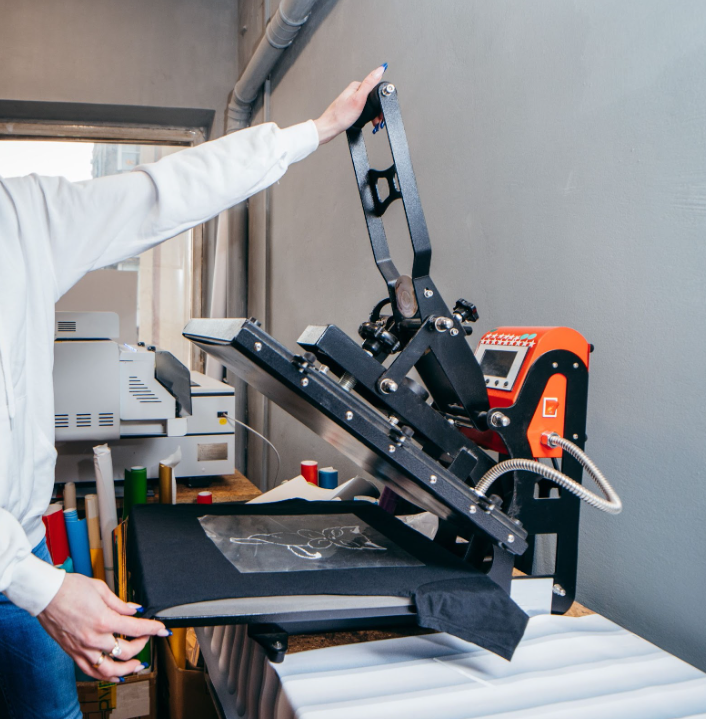
After curing, the film is carefully aligned over the fabric. The printed side is placed face-down against the garment, then firmly pressed using a heat press.
- Recommended temp: Around 160–170°C
- Press time: Typically 10–15 seconds
- Pressure: Medium to firm, depending on the fabric
This is where the magic happens, the print fuses with the fabric using heat and pressure.
6. Peeling the Film
Once pressed, the fabric is left to rest for a short moment before peeling. After that, the film is peeled away to expose the finished print on the garment.
- DTF is known for a cold peel, which means you wait a few seconds before peeling to get the cleanest results.
No cracking, no lifting. Just a vibrant, flexible print that feels soft and holds up well.
7. Post-Pressing (Optional but Recommended)
To lock everything in and improve durability, many professionals give the garment a final press (5–10 seconds). This helps the design blend more smoothly with the fabric and boosts wash resistance.
Key Benefits of DTF Printing You Should Know
1. It’s Wash-Durable and Crack-Resistant
DTF prints are built to last. With a heat-activated bonding agent, the design sticks firmly to the garment and stays put. That means your print stays smooth without cracking, lifting, or losing colour over time.
Unlike vinyl or low-cost heat transfers that start to flake after a few washes, DTF remains vibrant and flexible, even with frequent wear and washes. It’s made to look good for the long run, not just the first few spins in the machine.
2. No Pre-Treatment Means Faster Turnaround for You
With some methods like DTG, your order has to go through pre-treatment sprays, drying time, and extra handling before printing even begins. But DTF skips all that. No chemical soaking. No messy prep. No delays.
That means your shirts get printed quicker and reach you faster. Whether you’re rushing for an event or just tired of long waits, DTF helps you get your custom merch sooner, without compromising on quality.
3. No Big Orders? No Problem
With DTF, you don’t need to commit to bulk just to get your design printed. Want to print one shirt? Five? Twenty? You can, without paying for screen setups or worrying about colour limits.
That means you get the freedom to test ideas, try one-off prints, or launch something small without the pressure. Perfect if you’re experimenting with a new brand, preparing for an event, or just want something uniquely yours – fast, affordable, and on your terms.
4. A Cleaner Print You Can Feel Good About
Compared to older techniques, DTF printing is a cleaner option. It cuts down on water usage and skips the heavy chemical treatments. And while it does rely on PET film and adhesive powder, many setups now minimise excess material and improve efficiency.
If you care about how your merchandise is made, or want your brand to reflect more mindful values, DTF gives you high-quality prints with a lighter impact on the planet. It’s a practical way to produce responsibly without sacrificing looks, comfort, or durability.
Got a design you’re excited to print? Whether it’s for your team, an event, or a brand launch, we make it easy to get high-quality results without the fuss. WhatsApp, call, email, or send your idea here – and let’s get it going.
Screen Printing vs DTG vs DTF: What’s the Real Difference?
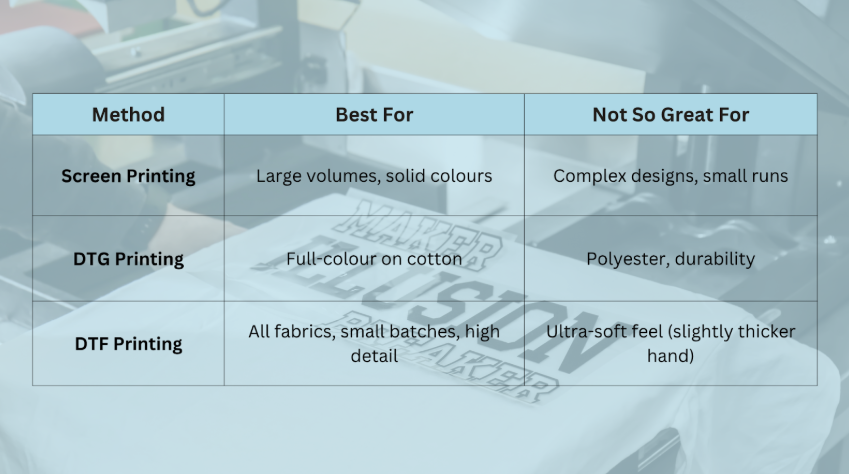
Screen printing works well when you’re producing large quantities with bold, simple visuals. But if your artwork is full of detail and you’re not printing hundreds, DTF offers more precision and colour clarity. And if you’ve tried DTG and struggled with fabric limitations or fading, DTF solves that too.
Why DTF Printing’s Winning Hearts (and Wardrobes)
1. You’re Not Stuck With Cotton
One of DTF’s biggest flexes? It works on nearly all types of fabrics.
Cotton, polyester, fleece, nylon, even leather. DTF doesn’t discriminate. Whether you’re designing for sports jerseys, tote bags or soft cotton tees, this tech adapts.
2. Bright Colours That Actually Stick Around
Traditional transfers tend to crack or fade fast. Not DTF.
It uses pigment-based inks and a heat-cured adhesive that holds strong through dozens of washes. That means your colours pop and stay that way.
3. Complex Designs? Bring It On
Small fonts, detailed gradients, or even photo-style designs, DTF prints them all without a hitch.
You won’t need to cut corners on your artwork. What you create digitally is exactly what gets printed on your tee.
Read more: Custom Corporate T-Shirts as Employee Incentives and Rewards
When DTF Might Not Be the Right Fit for You
DTF printing has plenty going for it. But, depending on what you’re planning to print, here’s when it might not be the best option:
- If you want a super-soft, barely-there print, you might prefer DTG or sublimation. Especially for light-coloured shirts. DTF prints can feel a little thicker on thinner fabrics, though most wearers find them comfortable and durable.
- If you’re planning to DIY, DTF printing might be tricky unless you’ve got the full setup. This includes PET film, adhesive powder, and a reliable heat press. For DIY beginners, vinyl or iron-on transfers might be easier to start with.
- If you’re printing in bulk with a simple logo, screen printing could be faster and more cost-effective. DTF shines in short runs and detailed designs, but for hundreds of plain tees? Screen printing might still win on speed and price.
Still, for most small to medium-sized projects, especially if you’re after full-colour, detailed artwork across different fabric types, DTF gives you great results with fewer limitations than most.

How to Make Your DTF Prints Last Even Longer
You’ve got your custom DTF-printed shirt – vibrant, crisp, and looking exactly how you wanted.
Now here’s the part most people forget: how you wash and care for it makes all the difference in how long that print actually lasts.
The good news? DTF prints are tough. But just like any quality garment, a little extra care keeps them looking newer for longer.
1. Turn It Inside Out Before Washing
To help preserve the design, wash your shirt with the inner side facing out. This helps minimise contact with rough surfaces like zippers, buttons, or textured fabrics that can wear down the print.
Think of it as protecting the artwork from the storm inside your washing machine.
2. Use Cold or Mild Water
Wash in cold or lukewarm water (below 40°C). Heat from hot water can slowly damage the print and its sticking power. This leads to cracks and fading.
Remember to use mild detergent and no bleach!
3. Avoid High-Speed Spins
DTF prints hold up well, but aggressive spinning can cause the film edges to lift over time. If you can, go with a gentler cycle or lower spin setting.
4. Say No to the Dryer (If You Can)
Heat is the main thing that wears down prints. Air drying is always your best bet. If you absolutely must use a dryer, go with a low heat setting.
Even better, dry it in the shade. On a balcony, near a window, or anywhere breezy. No shrinkage, no fading, and no damp smells.
5. Do Not Iron Directly on the Print
If you need to iron the shirt, just flip it inside out or place a cloth over the design to protect it. Direct heat can ruin the print’s finish.
Printing in Singapore? That’s Exactly What We Do
You’ve got the idea, maybe even the artwork, but you’re not sure who can deliver the perfect print?
That’s where we come in. At T‑Shirt Guys, we’re all about getting you vibrant, wearable results without the fuss.
Here’s how we do it:
- Printing Methods That Suit Your Project
From screen printing and embroidery to digital heat press, vinyl, and sublimation, we offer options to match your design, fabric, and budget. - Great Results Across Different Fabrics
Cotton, dri-fit, polos, hoodies, jackets, even caps and towels. Whatever you’re printing on, we know how to make it pop. - Fast Turnaround, No Unwanted Surprises
We work quick, keep things clear, and deliver straight to your door. No hidden fees, no ghosting, just honest timelines and service. - We Help with Your Artwork Too
Not sure how to prep your design? We’ve got you. From file formatting to mock-ups, we’ll make sure your idea is print-ready. - Strict Checks, Every Time
Before anything leaves our hands, it’s been checked thoroughly. You should get a shirt that looks good and feels even better. - For Teams, Brands, Events, and Everything in Between
We work with schools, startups, corporates, and creators. Whether it’s unity, identity, or self-expression, we’ll help you bring it to life.
Have a question or need a quote? WhatsApp or call us anytime, we’re happy to help you get started.
Final Thoughts
DTF printing technology is fast becoming the top choice for brands, creators, and businesses that want reliable, high-quality prints without the hassle.
It offers the freedom to create bold designs on all kinds of fabrics, with fewer limitations and more room to grow.
Need more ideas or know-how on printing? You’ll find plenty on our blog. Or just explore what we do at T-Shirt Guys if you’re ready to dive in.
